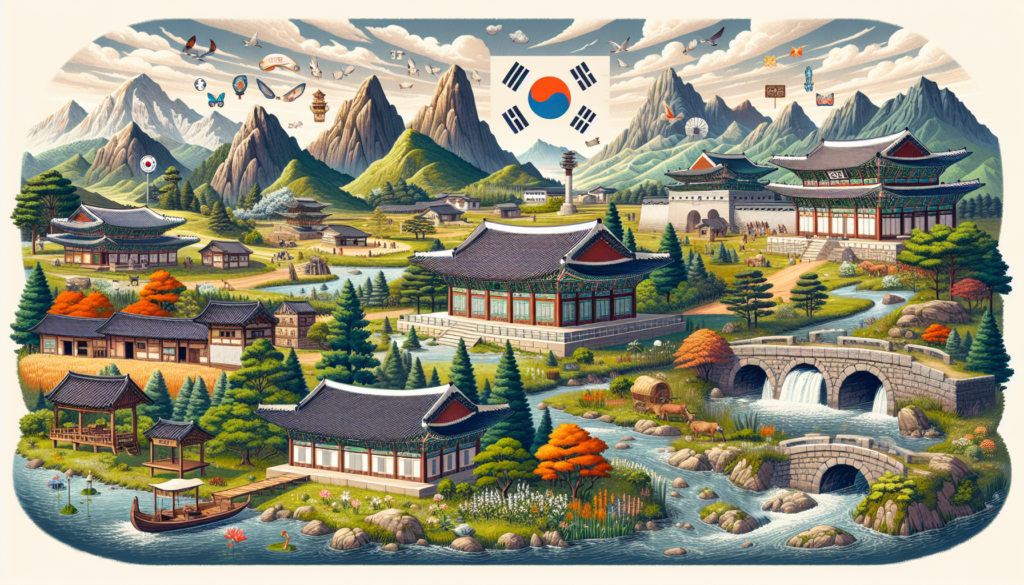
The Intriguing Journey Through Korean History: A Timeline Overview
Korean history is rich with cultural heritage, remarkable achievements, and transformative events that have shaped the Korean Peninsula and its people. Understanding the timeline of Korean history provides insights into the evolution of Korea from ancient times to the modern era. Whether you're a history buff or a curious learner, this timeline will guide you through significant milestones in Korean history.
H3: Prehistoric Korea (Before 2333 BC)
- Paleolithic Era: Evidence of human habitation dates back to approximately 700,000 years ago. The findings include stone tools and remains discovered in places like the Seungjeon-ri site.
- Neolithic Period (Around 8000 – 3000 BC): The emergence of agriculture marks this era. People began to settle and cultivate rice, millet, and barley. Pottery and weaving also began to evolve during this time.
H3: Gojoseon and Ancient Kingdoms (2333 BC – 668 AD)
-
Gojoseon Foundation (2333 BC): According to legend, Dangun Wanggeom founded Gojoseon, the first Korean kingdom, indicating the beginning of Korea's recorded history.
-
The Three Kingdoms Period (57 BC – 668 AD):
- Goguryeo: Known for its military prowess, Goguryeo expanded its territory into present-day Northeast China and parts of Mongolia.
- Baekje: Renowned for its advancements in culture and trade, Baekje had strong connections with Japan.
- Silla: The first to unify the three kingdoms, Silla left a lasting legacy through the construction of Buddhist temples and cultural artifacts like the incredible gold crowns.
H3: The Unified Silla and Goryeo Dynasties (668 – 1392)
-
Unified Silla (668 – 935): Marked by stability and cultural flourishing, this era saw the construction of significant Buddhist temples and the invention of the world's first metal moveable type printing.
-
Goryeo Dynasty (918 – 1392): Renowned for ceramics, particularly celadon pottery, Goryeo also laid the foundation for Korea's name. The dynasty faced internal strife and external invasions, notably by the Mongols.
H3: The Joseon Dynasty (1392 – 1910)
-
Foundation of Joseon (1392): Established by Yi Seong-gye, this dynasty lasted over five centuries and is known for political stability, cultural development, and Confucianism's establishment as a dominant ideology.
-
Hangul Creation (1443): King Sejong the Great commissioned the creation of Hangul, Korea's phonetic alphabet, to promote literacy among the Korean people.
-
Imjin War (1592-1598): A period of Japanese invasions led by Toyotomi Hideyoshi. Korean military and civilian efforts, notably Admiral Yi Sun-sin's naval victories, played a crucial role in defending the peninsula.
H3: The Japanese Occupation and Korean War (1910 – 1953)
-
Japanese Colonial Rule (1910 – 1945): Korea was annexed by Japan, leading to severe oppression, cultural erasure, and numerous protests for independence. The March 1st Movement of 1919 was a notable uprising seeking liberation.
-
Korean War (1950 – 1953): Following World War II, Korea was divided into North and South at the 38th parallel. The Korean War ensued, resulting in a devastating conflict that solidified this division. The war ended in an armistice agreement, but no official peace treaty was signed, leaving the peninsula in a state of tension.
H3: Contemporary Korea (1953 – Present)
-
Economic Growth (1960s – 1990s): South Korea experienced rapid industrialization, often referred to as the "Miracle on the Han River," transforming from a war-torn country into a thriving economy and tech leader.
-
Democratic Movements (1980s): The struggle for democracy culminated in the June Democratic Uprising of 1987, leading to the establishment of a democratic government.
-
North Korea's Isolation: In contrast, North Korea pursued a path of isolation and military buildup under the leadership of Kim Il-sung, leading to ongoing tensions.
-
Present Day (21st Century): South Korea is recognized for its vibrant pop culture, including K-Pop, film, and fashion, while the ongoing talks over denuclearization and peace efforts with North Korea remain pertinent issues.
Conclusion
Korean history is deeply layered, offering a fascinating narrative of resilience, adaptation, and cultural evolution. As we continue to explore the depths of Korean heritage—from its ancient kingdoms to its modern global influence—we gain a richer understanding of not just Korea but also the intricate tapestry of humanity itself.