The Elegance of Korean Calligraphy Art: A Journey Through Tradition and Modernity
Korean calligraphy, known as "Seoye" (서예), is a mesmerizing art form that has evolved over centuries, combining the beauty of the Korean script with deep cultural significance. With its flowing strokes and expressive forms, Korean calligraphy is not just a visual treat but also a means of philosophical expression. In this blog post, we will explore the history, techniques, and cultural relevance of Korean calligraphy, showcasing why it deserves a place of honor in the realm of fine arts.
The Historical Roots of Korean Calligraphy (H2)
Korean calligraphy has its origins in ancient China, where the practice began. As the Korean alphabet, Hangul, was developed in the 15th century, the art of calligraphy took on a new life, intertwining traditional elements with a distinctly Korean flair.
Influences From Chinese Calligraphy (H3)
The evolution of Korean calligraphy can be traced back to the influence of Chinese calligraphy, where brush techniques, styles, and principles were incorporated. However, over time, Korean calligraphers began to develop their unique styles and philosophies. For instance, while Chinese calligraphy emphasizes balance and symmetry, Korean calligraphy often reflects spontaneity and emotion, making it a more personal and expressive art form.
The Crafting of Hangul (H3)
The introduction of Hangul by King Sejong the Great was a significant milestone, as it aimed to promote literacy among common people. This new script offered calligraphers endless possibilities for innovation, leading to a flourishing of Korean calligraphy that highlighted the beauty of its characters and their unique aesthetic forms.
Techniques and Tools of Korean Calligraphy (H2)
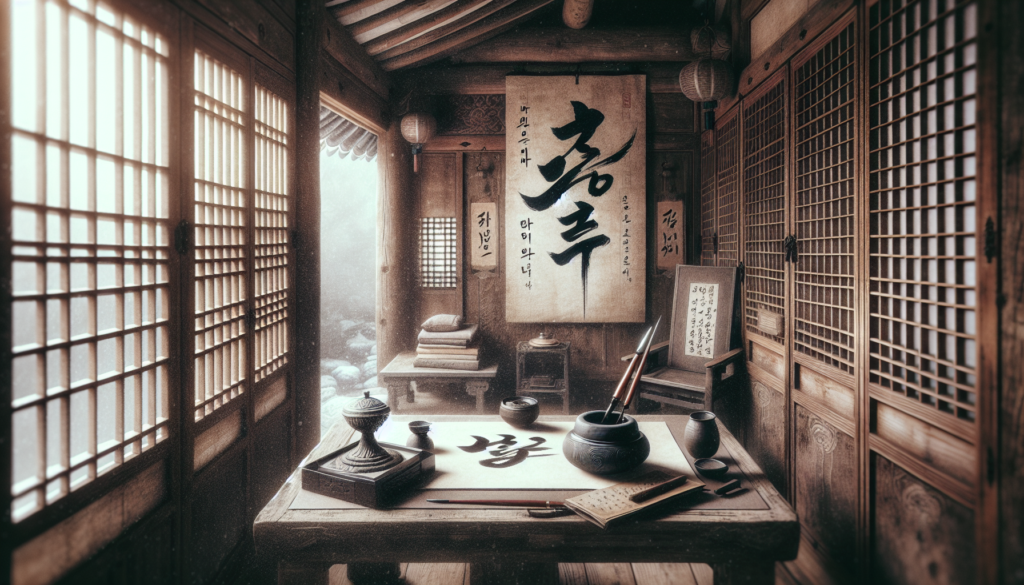
Korean calligraphy is characterized by its use of traditional tools, including the brush (붓), ink (먹), seal (도장), and special paper (한지). Each element plays a vital role in the creation of a calligraphic masterpiece.
Essential Tools for Calligraphers (H3)
-
Brush (붓): The brush is crafted from animal hair (often rabbit, goat, or horse) and is fundamental to achieving the varying line thickness that defines calligraphy.
-
Ink (먹): Traditional ink is made from soot and water, ground on an ink stone to achieve the perfect consistency.
-
Paper (한지): Hanji, traditional Korean paper made from mulberry fibers, is favored by calligraphers for its durability and texture.
-
Seal (도장): Often used to authenticate the work, a seal adds an extra layer of artistry and is usually carved from stone or wood.
The Aesthetic Philosophy of Korean Calligraphy (H2)
In Korean calligraphy, each stroke is more than just a mark on paper; it embodies the spirit and emotions of the calligrapher. This art form embraces the concept of "sumi-e" (ink wash painting), where the beauty of imperfection and spontaneity is celebrated.
The Importance of Balance and Rhythm (H3)
Korean calligraphy places great emphasis on balance and rhythm. Calligraphers must be attuned to their movements, allowing their emotions to flow through the brush. The result is not only a visual representation of words but also an experience that resonates on an emotional level.
Contemporary Korean Calligraphy: A Fusion of Past and Future (H2)
While deeply rooted in tradition, Korean calligraphy continues to evolve, becoming a medium for modern expression. Contemporary artists are exploring innovative styles and mediums, bridging the gap between traditional and modern art.
Examples of Modern Calligraphers (H3)
- Yoon Hyun-seok: Known for his abstract interpretations of calligraphy, blending traditional techniques with contemporary themes.
- Kim Soo-nam: Focused on environmental issues through her calligraphy, using natural dyes and materials.
Conclusion: The Enduring Legacy of Korean Calligraphy (H2)
Korean calligraphy is more than just an art; it is a means of cultural expression and a reflection of the soul. As it evolves and adapts to modern sensibilities, it remains an essential part of Korea's rich artistic heritage.
Whether you are an art enthusiast, a calligraphy beginner, or someone eager to understand the depth of Korean heritage, exploring the world of "Seoye" will undoubtedly enrich your appreciation for this beautiful art form.
Tags:
#KoreanCalligraphy #Seoye #Art #Culture #TraditionalArts #ModernCalligraphy
Categories:
- Art & Culture
- Korean Heritage
- Traditional Crafts
Call to Action:
Are you ready to dive deeper into the world of Korean calligraphy? Join our workshops and discover the beauty of this art form firsthand! Sign up today and unleash your creativity!