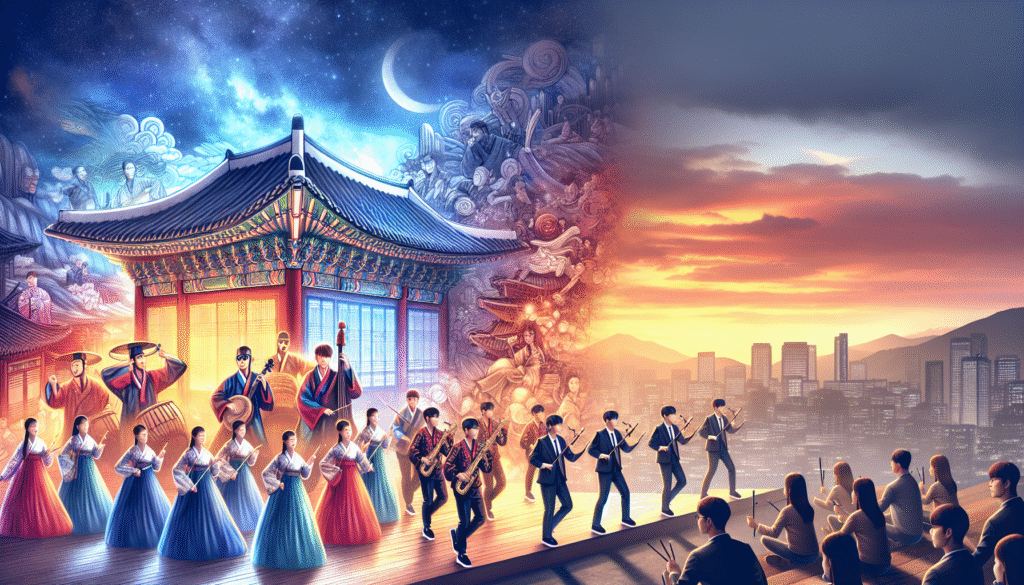
K-Pop vs. Korean Traditional Music: A Cultural Clash in Harmony
When we think of Korean music, two distinct yet fascinating genres come to mind: K-Pop and traditional Korean music, also known as Gukak (국악). While both styles serve as vital components of Korea’s rich musical heritage, they represent vastly different cultural influences, styles, and global appeal. In this blog post, we’ll explore the contrasts and similarities between K-Pop and Korean traditional music, highlighting their unique qualities and the effects they have on the world stage.
Understanding K-Pop: The Global Phenomenon
What is K-Pop?
K-Pop, short for “Korean Pop,” has exploded in popularity globally over the last decade. Characterized by catchy melodies, impressive choreography, and a diverse array of genres ranging from hip-hop to electronic dance music (EDM), K-Pop is continuously pushing creative boundaries. Artists like BTS, BLACKPINK, and EXO have garnered millions of fans worldwide, transforming K-Pop into a cultural phenomenon.
Key Features of K-Pop
-
Visual Appeal: K-Pop is known for its vibrant music videos and fashionable aesthetics. With elaborate sets and stunning visuals, K-Pop groups utilize music videos to grab the viewer’s attention.
-
Commercial Influence: K-Pop is heavily influenced by Western music trends. The genre often collaborates with international producers and artists, creating a fusion that appeals to a global audience.
-
Fan Interaction: K-Pop promotes a unique relationship with fans through social media platforms, live performances, and fan meetings, encouraging a sense of community and loyalty.
Exploring Korean Traditional Music: The Soul of Korea
What is Gukak?
Korean traditional music, or Gukak, has a long and rich history that dates back thousands of years. Comprising diverse styles such as pansori (a narrative singing genre), samulnori (percussion music), and court music, Gukak embodies the historical and cultural values of Korea. Its acoustic instruments, like the gayageum (a string instrument) and the haegeum (a traditional fiddle), deliver unique sounds that evoke a deep sense of Korean heritage.
Key Features of Gukak
-
Cultural Significance: Gukak is deeply rooted in Korean traditions and rituals. It serves as a means of storytelling, often reflecting historical events or social themes.
-
Improvisation: One of the fascinating aspects of Gukak is its emphasis on improvisation, allowing musicians to express personal feelings and ideas, thus creating unique performances every time.
-
Instrument Variety: Traditional instruments such as the janggu (hourglass drum) and piri (bamboo flute) are central to Gukak and have their own distinct sounds, unlike any Western instruments.
Comparing the Two Genres
Cultural Representation
While K-Pop acts as a contemporary representation of Korean culture, leveraging modern technology and global appeal, Gukak stands as a representation of heritage and tradition. K-Pop seeks to break cultural barriers, presenting a polished, universal message of love, resilience, and youth. In contrast, Gukak connects individuals to their roots, emphasizing communal and historical themes.
Evolution and Adaptation
K-Pop is known for its rapid evolution, constantly adapting to new trends and influences from various cultures worldwide. This keeps the genre fresh and exciting for fans. Meanwhile, Gukak, though it has seen some modernization in its performance style, generally maintains its traditional form and character, preserving the essence of Korea’s past.
Audience Engagement
K-Pop’s success is largely due to its interactive fan culture, where fans actively engage with artists through social media and streaming platforms. Meanwhile, Gukak often engages its audience through live performances, festivals, and cultural seminars, allowing vicarious experiences of Korean history and tradition.
Conclusion: A Cultural Balance
Though both genres serve very different purposes, K-Pop and Korean traditional music are integral to the Korean identity. While K-Pop represents modernity, globalization, and youth culture, Gukak stands as a pillar of tradition, emotional depth, and historical narrative. The coexistence of these two musical landscapes enriches Korea's cultural tapestry, providing audiences with both modern entertainment and profound historical echoes.
Whether you find yourself dancing to the infectious beats of K-Pop or getting lost in the melancholy melodies of Gukak, both forms of music are powerful expressions of the Korean spirit.
Tags:
#KPop #KoreanTraditionalMusic #Gukak #KoreanCulture #MusicComparison
Categories:
Cultural Analysis, Music, K-Pop, Korean Traditions
Call to Action
What do you think? Do you prefer the contemporary vibes of K-Pop or the captivating essence of Gukak? Share your thoughts in the comments below!